
Mouth-Blown in Thuringia
The Complete Guide to Nostalgie Christbaumschmuck Ornaments
A guide to the German workshop reviving historic glass Christmas ornament forms through traditional mouth blowing, hand painting, patination, and the remarkable visual language of Lauscha.
Old Forms, Newly Made
What is Nostalgie Christbaumschmuck?
Nostalgie Christbaumschmuck makes new ornaments with the delicacy, imagination, and aged beauty of treasured antique German glass.
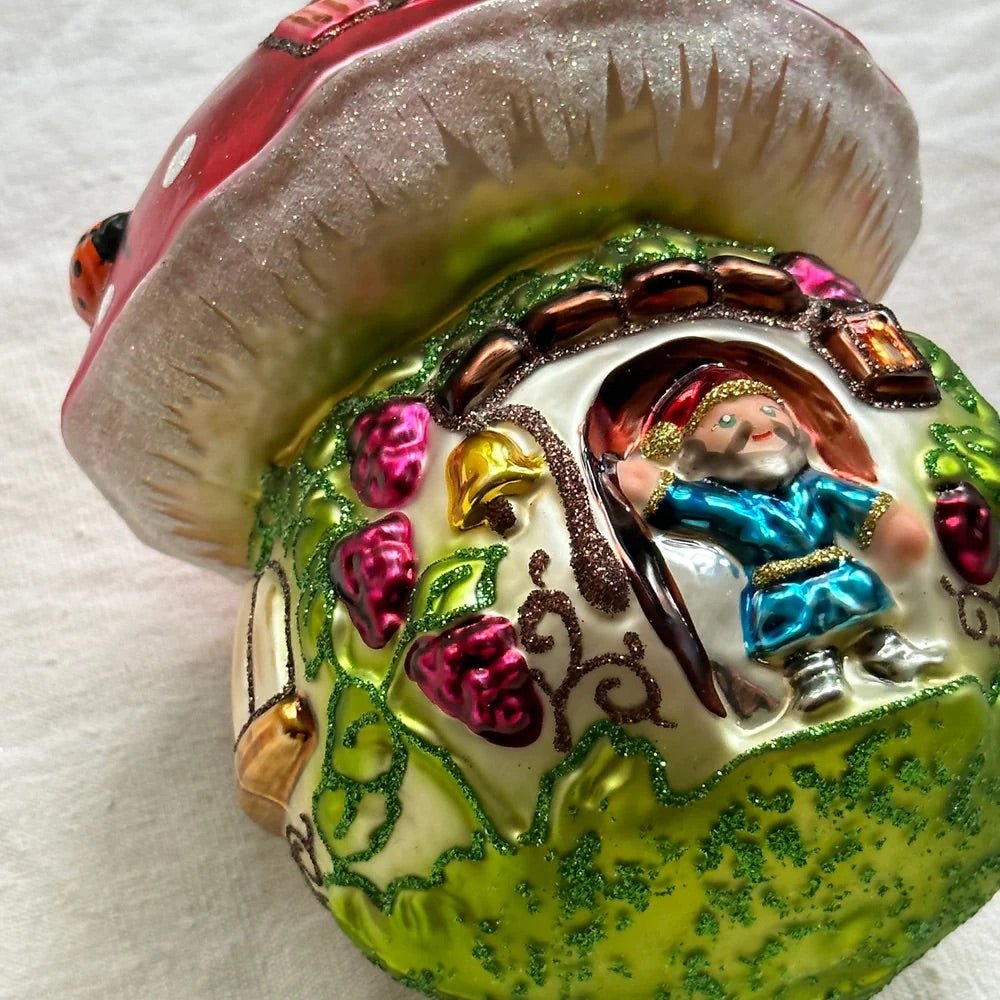
The workshop is rooted in Thuringia and the glassblowing tradition associated with Lauscha. Its ornaments are mouth-blown into carefully restored historic molds, then hand-painted, patinated, and finished with traditional-style metal caps. The designs recover shapes that might otherwise exist only in private collections or old family boxes.
This distinction matters: these are not anonymous imitations of vintage ornaments. They are contemporary pieces made with inherited methods and authentic molds. They allow a collector to enjoy the visual vocabulary of early Christmas glass without asking a fragile century-old ornament to withstand annual use.

From Flame to Tree
How the glass ornaments are made
A glass tube is heated until workable, then expanded by the glassblower’s breath into a mold. The mold gives the thin glass its dimensional form, whether an angel, fruit, animal, face, reflector, or finial.
After cooling, the ornament is finished by hand. Silvering or color establishes luminosity, while paint brings out eyes, clothing, feathers, fur, and small decorative motifs. Patination softens the new surface, giving it the depth associated with older Christmas glass. A traditional-style iron cap completes the piece.
Because the glass is mouth-blown and the decoration hand applied, subtle differences in color, line, and surface are natural. They are evidence of the process and make each ornament feel individual.
Beyond the Bauble
Classic Nostalgie ornament forms
Figures & animals
Angels, cats, mice, birds, children, and storybook characters turn the tree into a miniature cast of personalities.
Reflectors & indents
Concave centers catch candlelight and tree lights, creating depth and brilliance even when the palette is restrained.
Toppers & finials
Stars, angels, and elongated forms give the tree a confident finishing point and can guide the color story below.

Begin a Collection
How to choose your first ornaments
You do not need a full matched set. A compelling tree develops through repetition and surprise. Begin with three to five ornaments connected by color, subject, or shape, then add a few each year.
Choose a palette
Silver and gold feel luminous and formal. Red, green, and white are immediately festive. Pastels make elaborate forms feel airy and unexpected.
Choose a story
Birds, woodland animals, angels, celestial forms, or comic characters create a theme without requiring identical ornaments.
Choose a hero
A tree topper, large reflector, or exceptional figure can establish the mood. Smaller pieces can support it across the branches.
A Layered European Tree
Styling antique-inspired glass ornaments
Hang valuable glass after lights and garlands are secure. Place larger ornaments deeper in the tree to reflect light and create visual depth. Reserve the tips of strong branches for lighter figures and delicate shapes.
Mixing old and new is encouraged. Nostalgie ornaments sit beautifully with family decorations, paper ornaments, tinsel, ribbon, Swedish straw, and small spun-cotton figures.
Distribute color rather than clustering it in one area. Repeat a strong shape at least three times across the tree, then allow singular characters to reward close looking.
A small collection can also fill a tabletop tree, hang from a branch in a vase, or appear beneath a glass dome when no full-size tree is practical.
Fragile by Nature
How to care for mouth-blown glass ornaments
Hold the glass body, not only the metal cap. Hang each ornament from a strong interior branch with enough space that it cannot strike another piece. Keep it away from candles, fireplaces, moisture, pets, and heavily trafficked edges of the tree.
To store, wrap each ornament loosely in acid-free tissue and place it in its own compartment inside a rigid box. Do not press tissue into delicate indentations. Store boxes upright in a dry interior cupboard with stable temperature. Patinated surfaces should not be polished, washed, or sprayed.
Frequently Asked Questions
Nostalgie Christbaumschmuck FAQ
Are Nostalgie ornaments antique?
No. They are newly made ornaments based on historic designs and produced with traditional methods, restored old molds, hand painting, and patination.
Where are they made?
They are made in Thuringia, Germany, within the glassblowing tradition associated with Lauscha.
Why do the ornaments vary?
Mouth blowing and hand decoration naturally create small differences in form, paint, tone, and patina. No two handmade pieces are perfectly identical.
Can they be mixed with vintage ornaments?
Yes. Their historic forms and softly aged finishes are designed to sit naturally with antique and inherited Christmas decorations.